|
Alex Johnson, CCIM
Principal Broker
Laura Johnson
Vice President
We are experienced in Long-Term Care,Investments, Retail, Office, Industrial and Land opportunities.
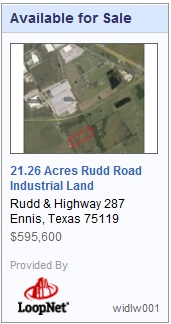
Featured Property
How to Win Big in Today's Economy
The altered economic landscape presents innovative and nimble businesses with opportunities to thrive.
Find out how by requesting my free report "How to Win Big in Today's Economy" by replying to this email.
Quick Quiz
Each month I'll give you a new question.
Just reply to this email for the answer.
What was Sitting Bull's nickname for sharpshooter Annie Oakley?
Why Not Pass Me to a Friend?
If you've enjoyed this newsletter and found its information useful, please pass it to another business owner or co-worker by Click here to forward this email.
Worth Reading
Why We Should Teach Entrepreneurship to Disadvantaged Students
By Amy Rosen
Harvard Business Review
We can't afford to shut the door on disadvantaged youths with the characteristics needed for entrepreneurship: curiosity, confidence, and a propensity to break rules. Suggests Rosen, the world will miss out unless efforts are made to nurture these smart, confident rule-breakers.
The Ultimate Purpose of Technology
By Derek Gillette
LinkedIn
Gillette highlights three specific gaps that technology helps close: the Distance Gap, the Knowledge Gap, and the Outcome Gap. Check out this post to find out how closing these gaps via technology can encourage important work still to be done.
LINKS YOU CAN USE
This Month: Team Building
With interdepartmental projects, the rise of the agent economy, and the need to work more interactively with clients, it’s critical for your team to know how to work together.
Check out the links below for some great ideas.
The 5 Languages of Appreciation
Your team plays well together if they understand each other. There is a cost for The 5 Languages of Appreciation in the Workplace, but it may help.Tips for Employee Collaboration & Creativity
Can spontaneous interaction increase team building? According to this useful piece, the answer is a resounding yes.
Wisdom
Quotes on...Curiosity
My favorite words are possibilities, opportunities, and curiosity. I think if you are curious, you create opportunities, and then if you open the doors, you create possibilities.
Mario Testino
The important thing is not to stop questioning. Curiosity has its own reason for existing.
Albert Einstein
Research is formalized curiosity. It is poking and prying with a purpose.
Zora Neale Hurston | |
Inside Your Newsletter this Month...
REAL ESTATE
Compare Vacancy Rates When Buying Multi-Unit BuildingsThe vacancy rate is a useful tool when you're deciding to invest in a multi-unit building, hotel, or motel. Although it's not the only factor investors consider, the vacancy rate makes it easy to compare properties: If the vacancy rate is high, it indicates that a building is not renting well; if it is low, it may be a good bet to buy.
Vacancy rates are based on the number of empty units, including those units ready to be rented out, units under renovation, and units just vacated. The rate is expressed as a percentage and is the opposite of the occupancy rate-the number of units occupied. The two together should always add up to 100 percent.
Accommodation properties typically have seasonal fluctuations in vacancy and occupancy rates. When the vacancy rate is high, owners may list the property, as they have already capitalized on the available income. However, a high rate can make it harder to sell.
On the other hand, a low vacancy rate indicates that a property is renting well; the owner may consider increasing the rent, as there are more tenants looking to rent than there are available units. While this is a good time to invest in a property, the asking price will reflect the favorable conditions.
All this said, a high vacancy rate may not be the kiss of death for a property. Investors who are interested based on other factors may consider lowering rents or offering incentives to get the units rented and improve the rate.
INNOVATION
Is Creativity for the Few or Can We All Learn to Innovate? In business, creativity equals success. Those who can think outside the box may become superachievers. But, according to the latest business theorists, creativity is not the purview of a few; it can be learned. In business, creativity equals success. Those who can think outside the box may become superachievers. But, according to the latest business theorists, creativity is not the purview of a few; it can be learned.
In the Wharton School of Business's online business management series, marketing professor Rom Y. Schrift writes, "I think there are individual differences in our propensity to be creative but having said that, it's like a muscle. If you train yourself...you can become more creative. There are individual differences in people, but I would argue that it is also something that can be developed, and therefore, taught."
Malcolm Gladwell, author of Outliers: The Story of Success, concluded through the examination of high achievers' lives that 10,000 hours of practicing a particular task builds new creative skills that lead to significant innovations. However, Gladwell subsequently clarified his position in a reddit "Ask Me Anything" interview: "Practice isn't a SUFFICIENT [sic] condition for success. I could play chess for 100 years and I'll never be a grandmaster. The point is simply that natural ability requires a huge investment of time in order to be made manifest."
As Cody C. Delistraty says in an article in The Atlantic, "Prevailing theories on creativity focus on methodology, or amount of practice. But new studies suggest artistic talent may be more hardwired than we thought."
In other words, some people are just born creative. But, as Schrift might say, that doesn't mean you can't work hard to develop creativity.
HOT BIZ TRENDS
Encouraging a Corporate Sense of Belonging A sense of belonging is a critical mental health concept. When it's missing, individuals feel lonely and detached. A sense of belonging is a critical mental health concept. When it's missing, individuals feel lonely and detached.
As Karyn Hall, Ph.D., director of the Dialectical Behavior Therapy Center in Texas, wrote in Psychology Today, "A sense of belonging to a greater community improves your motivation, health and happiness. When you see your connection to others, you know that all people struggle and have difficult times. You are not alone. There is comfort in that knowledge."
But how do organizations build that sense of belonging that appears so very important to employees and their employers?
When employees have friends at work, it enhances their sense of belonging. That's why so many companies encourage opportunities for informal at-work contact.
These companies make a special effort to bridge the chasm between "we" and "they" by forging teams among different silos. In a Herd Wisdom post, organizational consultant Meisha Rouser suggests, "When employees are able to span functional boundaries to connect to each other it builds a sense of unity and partnerships."
Shared vision and ownership is another way to build a sense of connection. Smart company leaders invest time in communicating their vision and sharing their goals.
What's more, fostering two-way communication by inviting input and acting on it shows employees they are valued and respected-keys to a feeling of belonging.
Savvy employers also encourage their employees to have a life outside work, offering family-friendly work options, encouraging volunteerism, and even paying for fitness memberships. Why? Simple. Happy employees are good employees.
REAL ESTATE
How to Successfully Negotiate a Retail LeaseRetail leases are complex documents; even the most seasoned investors can stumble on the complexities of the agreements.
A well-worded document can save you money up front and put your business in the best position to succeed. A poorly worded agreement will be costly and may create substantial obstacles that you will have to overcome down the road. Here are eight tips on successfully negotiating a retail lease agreement:
Hire your own agent. Don't sign on with the leasing agent-however good. If you let the landlord's agent show you space-and/or comparable properties-you are showing your cards and limiting your negotiating power. Hire your own commercial real estate agent to represent your interests.
Don't rush. Give yourself ample time to work with your agent to select the right property. It's not unusual to start looking at sites six months before you plan to open. This means you won't feel pressured into selecting a less-than-optimal site in order to open on time.
Do your homework before looking at sites. Sit down with your agent and outline the locations you're considering. Among other things, consider the distances between your ideal location and the location of competing and complementary businesses.
Avoid signing the landlord's standard lease form. By signing the standard lease form, you agree to all the landlord's terms and conditions without the option to negotiate. This is where hiring an experienced commercial agent will really help; he or she has the expertise to negotiate an agreement suitable to both landlord and tenant.
Know your renewal options. When negotiating your initial lease, you will want to include renewal options. This clause gives you the ability to renew the lease for a term (or several terms) after the initial lease expires. Most often, the same terms as the initial lease will continue in renewal, with the exception of the rent. Some contracts include a set schedule for rent increases upon renewal.
Negotiate an exclusivity clause. As a retailer, it's important to ensure that a competing retail business does not set up shop in the same mall. An exclusivity clause-sometimes called a restrictive covenant clause-will help to minimize this possibility, although, depending on the business type and location, this may not be practical.
Negotiate a rent-free period. A rent-free period is a common inducement that landlords use to attract new tenants to a space. This period is often used by retailers to set up and stock their stores, and its possibility will be dictated by market conditions. If retail vacancies are high, you are more likely to be able to negotiate a rent-free period.
Negotiate a favorable exit and restoration option. As a retail tenant, the less money you have to spend on restoring the premises in the event that you do not renew the lease term, the better.
Even for savvy retailers, negotiating a lease can be complex; ensure you have a good commercial agent in your corner. |